Historical Thinking Skills |
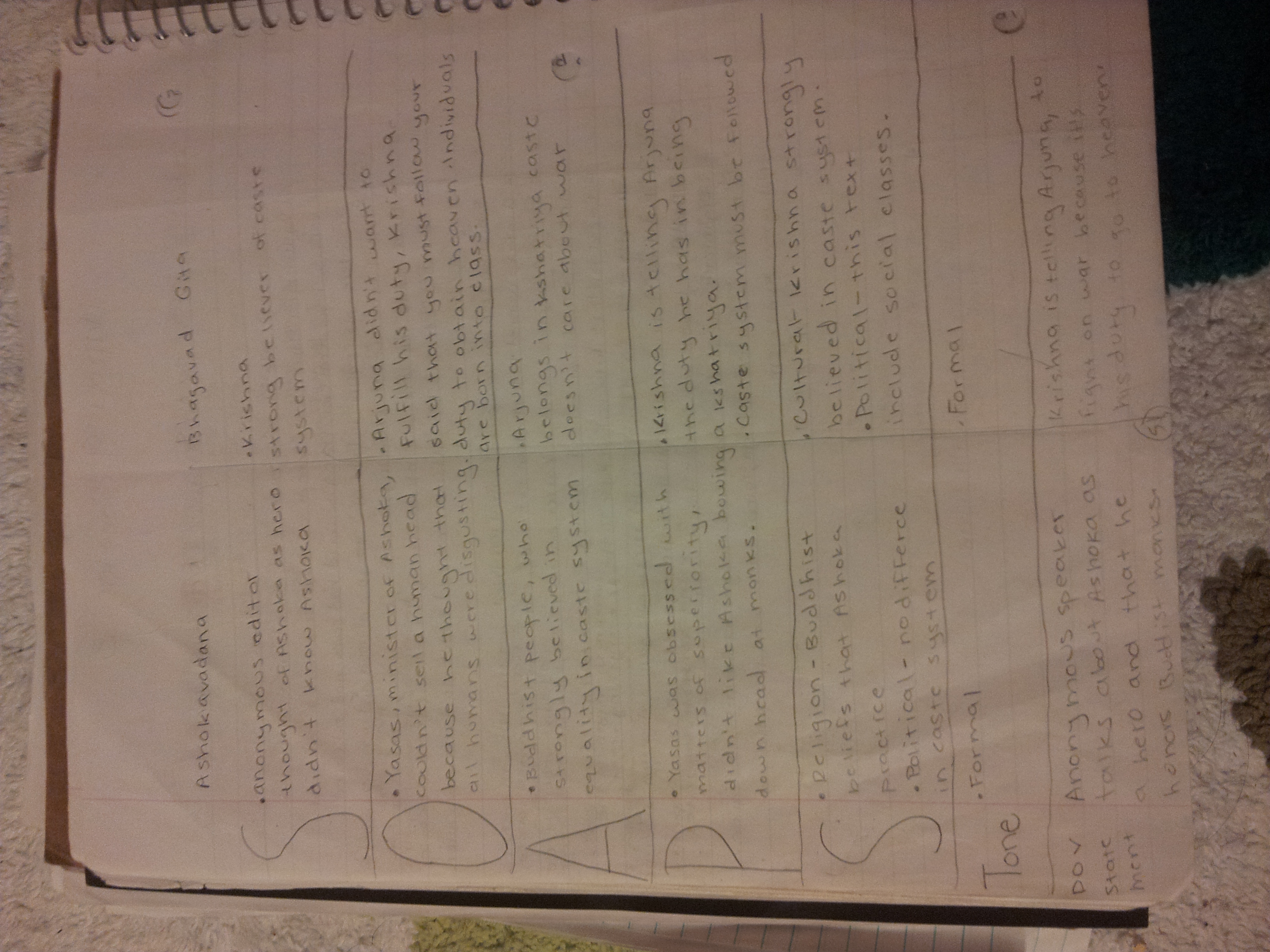
Crafting Historical Arguments from Historical EvidenceReflectionIn historical thinking you need to be able to identify, describe, and evaluate evidence about the past from diverse sources, with respect to content, authorship, purpose, format, and audience. One example could be creating a SOAPSTone chart, which is to read a document from a certain time period and be able to identify its significance towards history. Hammurabi’s Code can tell the reader how unequal the Mesopotamian society was towards the poor. Another example could be found in architecture. Rulers of ancient empires used to show their power through magnificent structures built in their names. In, Egypt, the Great Pyramid of Giza was a project created for Khufu, to show his greatness. In Mesoamerica, rulers would try to build bigger pyramids than the last ruler. This was done to show to show the people that the ruler ruling at the time was better than the last ruler. While writing a DBQ, you need to be able to evaluate different sources and interpret them as best as possible. To show your understanding you must provide evidence for a couple of the documents. Also to group them as many ways as possible and not just write a summary for each document, but to explain them thoroughly. Depending on what you score on a scale of one through seven, is how well you were able to understand the various documents. Being able to explain different types of evidence may also apply to other essays, not just a DBQ. EvidenceAs evidence, I am going to use a SOAPSTone that is comparing documents from the textbook. The documents are addressing Ashokavadana and Bhagavad Gita that are during classical India. Both documents are talking about how religion is shaping the social status of people in India.Also a DBQ analyzing the different views people had towards the Mongols. |
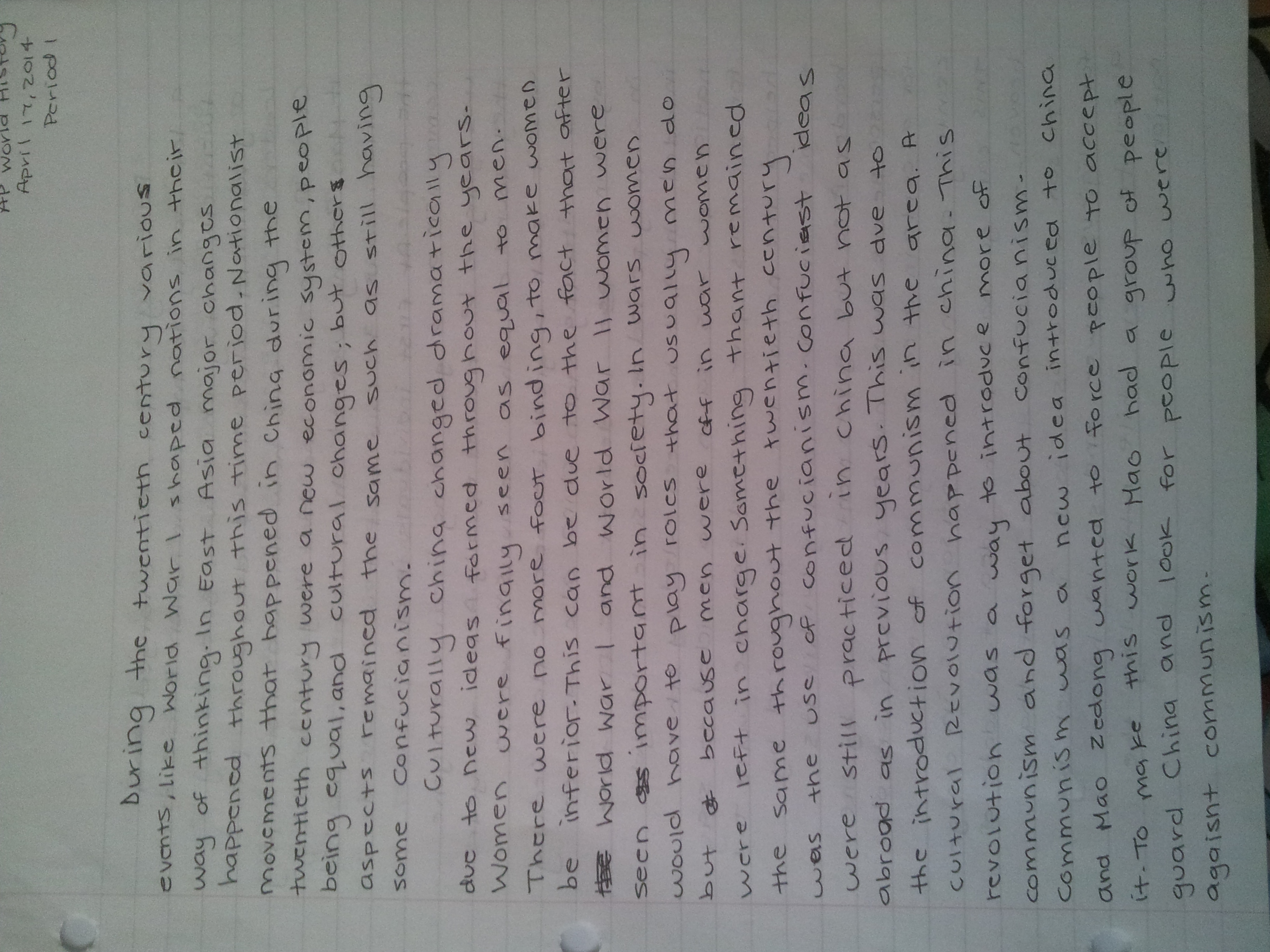
Chronological ReasoningReflectionAs a student I need the ability to describe, analyze, evaluate, and construct models of historical periodization to be able t identify major events that change history. Throughout the school year, we, the students were asked t write various Change Over Time essays.On this type of essay you are required to describe events that change or remain the same during a given time period and/or region. A good way to remember important events is by knowing the the Chinese Dynasties Song. China for the most part played a key role in changing the course of history. By being able to remember major events in each dynasty will help you connect it to other parts of the world. Another way to help you in remembering events is by doing a timeline. You start and end it in the years assign for you to write. In between those years you write what you know happened and then try to remember how those events changed what was happening in a region. An example could be be that before the eighteenth century; women used to stay at their house, but because the Industrial Revolution and total wars needed more labor, women were drafted to work in factories. Another example could be, the different religions that emerged in South Asia since recorded years. Hinduism emerged during the second millennium BC and remained the official religion even after Buddhism appeared and Islam tried to gain converts in the thirtieth century. EvidenceAs evidence, I am using a Change and Continuity essay. This prompt asked me to describe changes within China during the twentieth century. I described the cultural, political, and economic changes or continuities that happened. For the most part China changed in various ways to try to become a prosperous nation.During this time nationalists and communists were fighting to win power and this is why China suffered so much changes. |
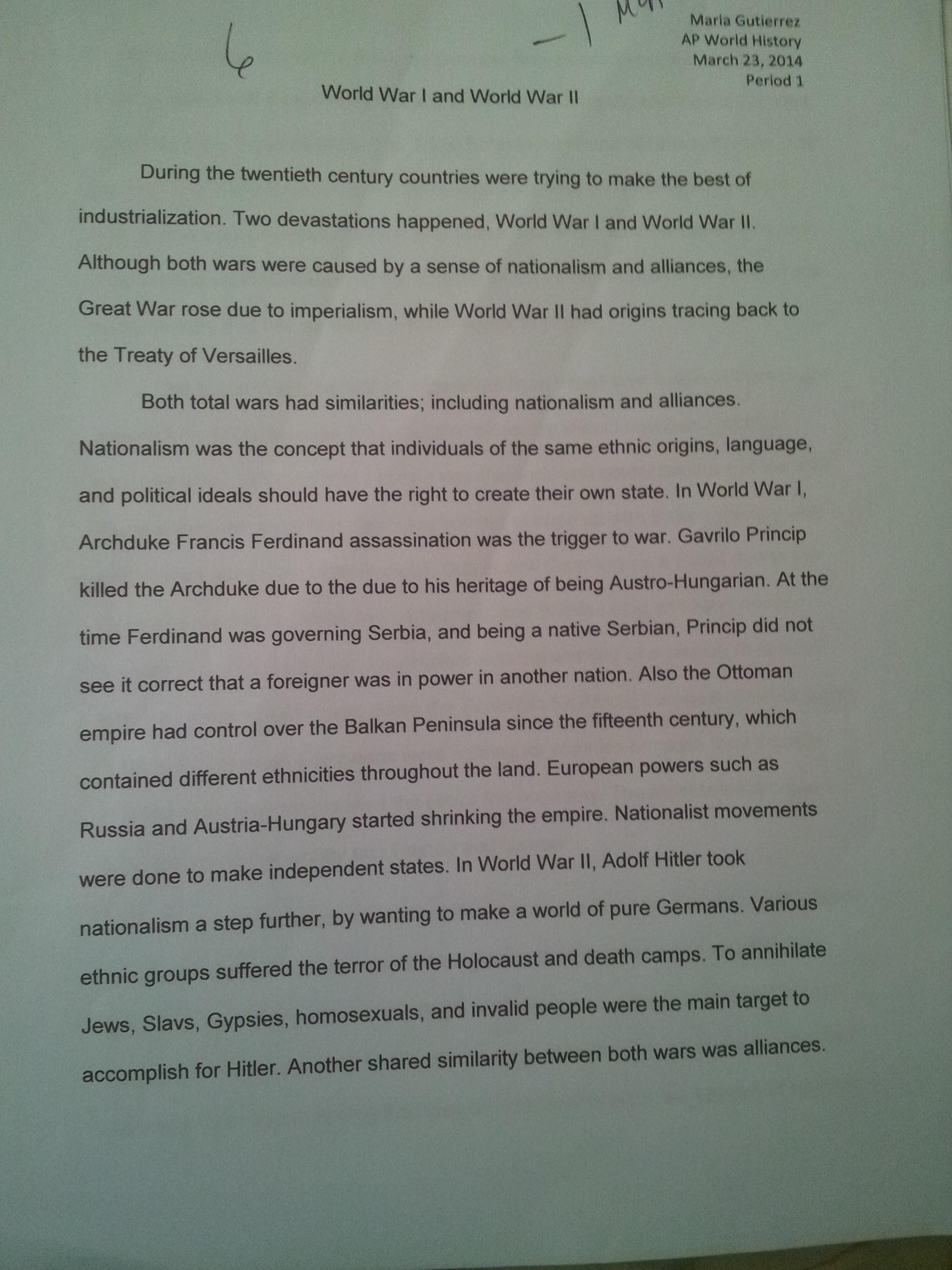
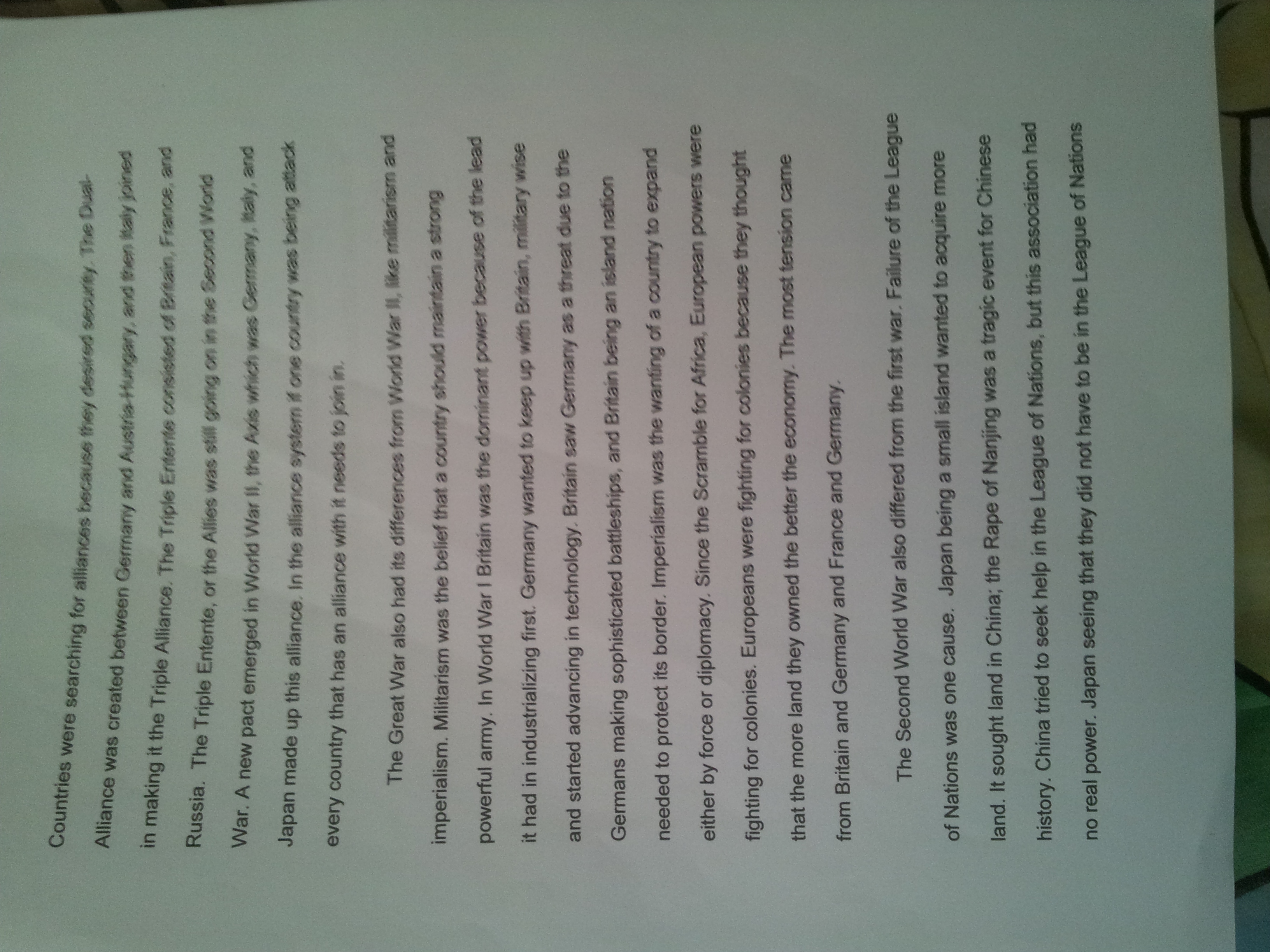
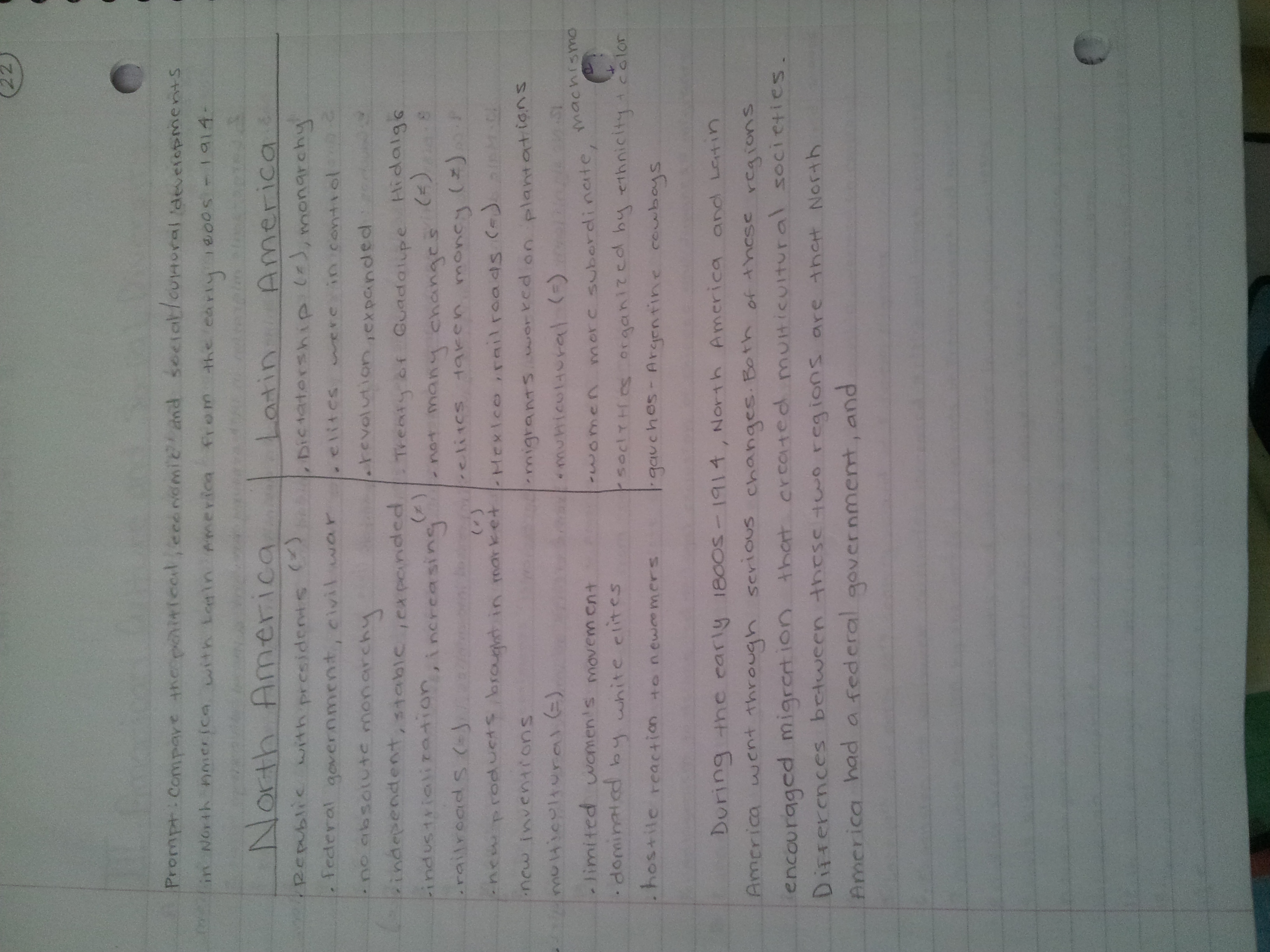
Compare and ContextualizationReflectionAnother ability a student needs is to be able to describe, compare, and evaluate multiple developments in a society, one or more developments across or between different regions. In a Compare and Contrast essay, you are asked to compare two factors in history. It could be societies, new technology; or how different societies deal with religion, political systems, or other events. An essay I remember writing about was, comparing Latin America and North America after the arrival of Europeans in 1942. My body paragraphs were addressing the social, economic, and political status in both regions. For the most part Latin America differ from North America in that they created a new social structure to make sure Iberians were at the head of everything, while in the North, racial mixing was discouraged. Both regions were abased on an agrarian economy, but cultivated different crops. In North America tobacco was the main cash crop, while in Latin America, sugar was mainly being exported. They also differ in that North America had to set up new a new government system and Latin America had to follow the orders of its mother country which was either Spain or Portugal. You can set up different types of charts to help you compare different aspects of history. A SOAPSTone chart is one way. By having the views of different documents, it will help you see the differences between the two faster. A SPICE chart can also be used to compare various societies. EvidenceAs evidence I am using a Compare and Contrast essay as well as a chart that is comparing Latin and North America. The essay is about the causes of World War I and World War II; which had similarities such as begin caused by nationalism and alliances but also differed.The chart is comparing Latin America with North America from the year 1800 through 1914. The whole point of this chart was to help me come up with a good thesis statement. |
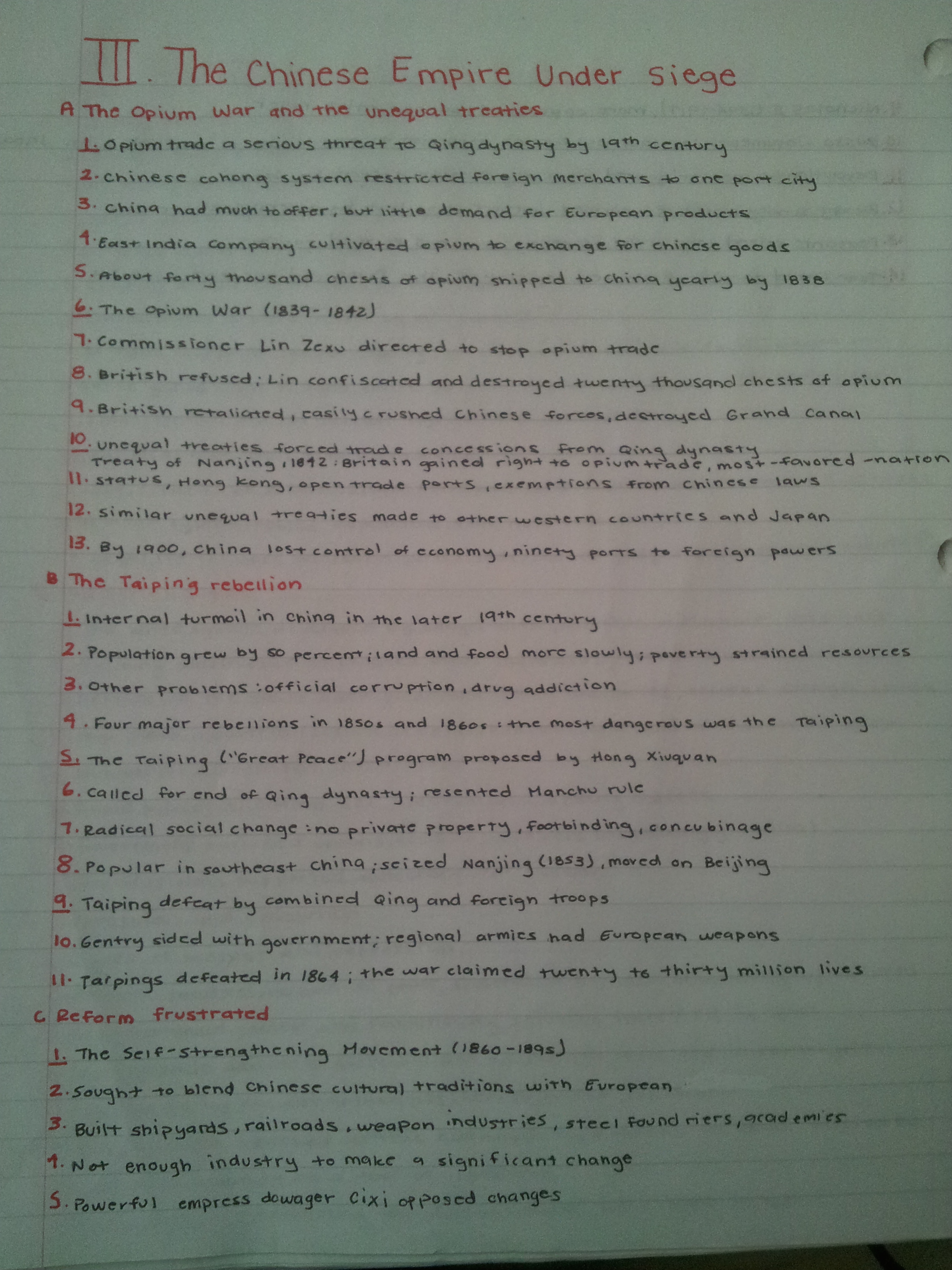
Historical Interpretation and SynthesisReflectionA skill I learned throughout the course was, historical interpretations and synthesis. This helped me to evaluate documents from the past and being able to understand the meaning of them and possibly linking them to another aspect in history. Thesis statements can be a great example to use. To be able to write a thesis you will want to know as much as possible of the prompt you are assigned to. It may sound as an easy task to do, but it is not. You do not want to make it to lengthy to the point that is starting to sound like a paragraph. You just want to state the information required to answer the prompt, but not go into detail abut it. Another example could be the synthesis notes that we had to do for homework. After reading each section in the textbook we had to do notes for almost every paragraph. This was done to help us study the important events in each chapter, and not go back to each chapter once we were further in the textbook. A SOAPSTone chart, can also fall into this category. This kind of chart helps you identify the speaker, occasion, audience, purpose, subject, and tone of a document. By having this done you can start making connections with other events from the time period being discussed. Usually we did SOAPSTone charts from documents in the textbook, from the chapter we were reading about, to help us understand the views of people from the time period. EvidenceAs evidence I am using synthesis notes that I have done after reading a portion of the book. This notes are from different chapters in the textbook.They are meant to help me study the key events in a chapter without me having to waste time going back and reading it from the book. |